WW2 Veteran of D Day and Okinawa battle, Jack Gutman and his daughter, Paula Shaw, CADC, DCEP, Grief Therapist
November 5, 2016
 Richard and Joe welcomed Jack Gutman, a spry 90 yr old, WW2 veteran.
After training for months as a Medical Corpsman, his first active duty took him to England to prepare a hospital for the aftermath of the invasion of Europe. On D-Day he landed between Utah and Omaha Beaches in the invasion of Normandy, having the difficult task of caring for those killed and wounded during the attack. He later served the same function in the Invasion of Okinawa.
He is one of the few veterans who served in both theaters of the war. After dealing with undiagnosed PTSD for 66 years, he finally got counseling from the VA and today leads a happy, healthy life. Today he is one of the last living World War ll Veterans who is healthy, lucid and able to share with us the realities of D-Day, a colossal moment in our country’s history.
He is also a speaker and author who loves speaking to students and touching lives with his story. Recently he was video interviewed by the Smithsonian World War II Museum in New Orleans. This interview is now part of the museum’s archives. His book, “One Veteran’s Journey. To Heal, the wounds of War” is available on Amazon.
 In the second half of the show, Richard and Joe conversed with Jack’s daughter, Paula Shaw, CADC, DCEP, a Life Transition Strategist and Grief Specialist. She discusses how she helped her dad address his PTSD 66 years after his military service.
For more than 20 years, Paula has been passionate about empowering people who are dealing with profound loss and help them turn their pain into possibility.
In her practice, Paula Shaw Counseling, She uses mind/body tools and techniques to help people ease and eliminate stress, depression, anxiety and the conditions they precipitate like weight gain, relationship distress, lack of energy and apathy towards life. She also helps clients who are going through major life transitions or seeking freedom from self-destructive addictions.
Paula has degrees in Education and Communications from Long Beach State University, as well as graduate counseling credentials in Grief and Addictive Disorders, from Loyola Marymount University. She is one of the founding members of the Association of Comprehensive Energy Psychology and currently serves on its board of directors.
She is also a Best Selling Author, Keynote Speaker, and talk show host on Transition Radio.
Paula is the author of “Chakras, the Magnificent Seven” (2002), as well as the newly released “Grief, When Will This Pain Ever End? Finding Your Way out of the Depths of Despair after Profound Loss”, which was released June 15, 2015.
Continue reading →Jason Kruger, President of Signature Analytics and Former SD City Council Woman Donna Frye
Joel Grushkin, San Diego Regional Director of Cost Segregation Initiatives
Lizzie Wittig from Susan G. Komen-San Diego and the 20th Annual Race for the Cure
Lizzie Wittig from Susan G. Komen-San Diego and the 20th Annual Race for the Cure
October 8, 2016
 This week Richard and Joe welcomed Elizabeth (Lizzie) Wittig, Director of Grants and Public Policy of the Susan G. Komen foundation in San Diego County. They discussed the upcoming 20th Annual Race for the Cure for Sunday, Nov. 6, 2016, in Balboa Park, the work of the foundation and the Three Day, 60 mile walk run in San Diego on Nov. 18th -20th.
The 5K and 1-mile walk/run raises significant funds for the fight against breast cancer, celebrates survivors and honors those who have lost their battle. Proceeds from the event will go toward Komen San Diego, the County’s largest funder of free breast cancer services and support. Community members can register here. When San Diegans participate, their donations go directly to help breast cancer patients in San Diego County, as well as toward research grants internationally. With over $1 million invested this year alone, Komen San Diego is the only organization providing qualified women the free services they need for every step of the breast cancer journey. The world’s largest investment of breast cancer research – next to the U.S. government. Since 1982, Susan G. Komen has invested more than $889 million in over 2,400 grants for breast cancer research. Currently, in San Diego, there is more than $2 million in five active grants at work to find the cure!
On November 6, more than 15,000 San Diegans will join together to participate in the 2016 Race for the Cure. Participating in the Race helps Komen San Diego provide free services for every step of the breast cancer journey:
Diagnostic mammograms, biopsies, MRI’s, ultrasounds and more for qualified women who have nowhere to turn when breast cancer strikes.Temporary financial aid – including rent, mortgage, prescription drug payments and more.
Meal delivery for a woman and her entire family.
Intensive patient navigation – complete with emotional support for all.
Wherever there’s a gap – Komen San Diego fills it.
Elizabeth (Lizzie) Wittig started volunteering at Susan G. Komen in 2003, when she was just 17 years old, the same year Mom was diagnosed with breast cancer. And that is the same year she participated in her first Race for the Cure – and The 3 Day. She has been walking ever since. Lizzie’s Mom passed from breast cancer in 2009 – but that was six years longer than the doctor’s thought she would. Her life was extended thanks to a Susan G. Komen-sponsored clinical trial. Lizzie is passionate about this cause – and she has put that passion for working for the mission. She and her 20-person walking team have raised more than $800,000 since 2003.
Continue reading →Martha Gilmer, CEO of the San Diego Symphony Orchestra
Martha Gilmer, CEO of the San Diego Symphony Orchestra
October 1, 2016
 This week, Joe and Richard had the pleasure of talking with Martha Gilmer, CEO of the San Diego Symphony Orchestra. They discussed her early years and discovery of her love of classical music, her education and career, mostly spent with the highly regarded, Chicago Symphony Orchestra (CSO). There was also extensive discussion of the innovative and widely appealing programs she has developed for San Diego audiences, including a new permanent band shell (in development) for the Summer Pops Series, great family film events with live orchestra music, and events with jazz and classical collaborations.
Martha joined the San Diego Symphony Orchestra in October 2014 after a 35-year career at the Chicago Symphony Orchestra. As the CSO’s vice president for artistic planning and audience development, Martha Gilmer was primarily responsible for working with Music Director Riccardo Muti in program planning, engaging guest conductors and artists and formulating the Orchestra’s artistic profile – focusing on a dedication to providing stimulating and exciting programming. The CSO had been Gilmer’s professional “home” since 1976 when she began as a student intern. In 1979 she became an assistant artistic administrator and later artistic administrator in 1985. In 1998 she was promoted to vice president for artistic planning, adding the additional audience development component in 2004. She has developed longstanding relationships with some of the world’s greatest artists, including current CSO Music Director Riccardo Muti and two previous CSO music directors, Sir Georg Solti and Daniel Barenboim. She has also worked closely with the CSO’s Conductor Emeritus Pierre Boulez and former CSO Principal Conductor Bernard Haitink, as well as many other pre-eminent conductors. Martha also engages in extensive lecturing and writing on music.
Gilmer works closely with the most talented guest artists and composers of today. She has developed partnerships with artists such as Yo-Yo Ma, Yefim Bronfman, Emanuel Ax, Pierre-Laurent Aimard and Pinchas Zukerman, as well as all of the CSO’s past and present composers-in-residence: John Corigliano, Shulamit Ran, Augusta Read Thomas, Osvaldo Golijov, Mark-Anthony Turnage, Mason Bates and Anna Clyne. She has championed the creation of contemporary music, regularly supporting the commissioning of new works and working with composers on existing compositions.
Gilmer attended Burlington High School in Burlington, Wisconsin and is a graduate of the Northwestern University School of Music, and she has been active as an alumna, serving on the Visiting Committee and the Dean Search Committee and delivering the 2000 commencement address. She also earned a Northwestern University School of Music Alumni Merit Award.
The San Diego Symphony Orchestra offers a wide range of concert experiences and performs over 120 concerts annually including the Jacobs Masterworks (conducted by Music Director Jahja Ling) offering classical repertoire and featuring acclaimed guest artists such as Lang Lang, Joshua Bell and Itzhak Perlman and the City Lights series led by principal pops conductor and Academy-Award® winning composer Bill Conti.
The home of the San Diego Symphony Orchestra is the Joan and Irwin Jacobs Music Center in downtown San Diego, regarded as one of the finest classical music venues on the West Coast. In October 2013 the SDSO made its acclaimed Carnegie Hall debut featuring piano soloist Lang Lang and immediately followed with an 11-day China Friendship Tour with concerts in Beijing, Shanghai and San Diego’s sister city, Yantai.
Continue reading →David Feifel, MD, PhD, Professor, Physician and Neuropsychiatrist Extraordinaire at UC San Diego
TJ O’Hara Presidential Candidate
David Feifel, MD, PhD, Professor, Physician and Neuropsychiatrist Extraordinaire at UC San Diego
September 24, 2016
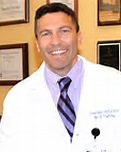 This week, Richard and Joe welcomed Dr. David Feifel, neuropsychiatrist specializing in adult attention deficit hyperactivity disorder (ADHD) and treatment-resistant mood disorders. He is the director of the Neuropsychiatry program, the Adult ADHD program, and the Transcranial Magnetic Stimulation (TMS) program at UC San Diego Health.
Dr. Feifel’s clinical focus is the diagnosis and treatment of psychiatric disorders stressing a biological orientation. He is Director of the Adult Psychiatric Services at UCSD Medical Center, which includes the Neuropsychiatry and Behavioral Medicine Unit (NBMU), an 18-bed inpatient unit and the Consult / Liaison service
Dr. Feifel is also a trained neuroscientist and a professor in the Department of Psychiatry at UC San Diego School of Medicine, where he teaches medical students, residents and postdoctoral fellows. He runs a basic neuropsychopharmacology laboratory on the campus of the UCSD Medical Center. His laboratory develops animal models to explore the biological mechanisms underlying psychiatric conditions such as psychosis and to assess the potential of novel pharmacological treatments, particularly ones aimed at neuropeptide targets.
Dr. David Feifel earned a Bachelors of Science, Master’s Degree and a Ph.D. from the University of Toronto, Canada, where he also earned a Medical Degree. After completing an internship in Internal Medicine at the Toronto General Hospital, Dr. Feifel completed his residency training in Psychiatry at the University of California, San Diego, where he served as Chief Resident for the UCSD Outpatient Psychiatry Services in 1994. In 1995, he joined the faculty of the Department of Psychiatry where he currently holds the rank of full Professor. Dr. Feifel is a Diplomate of the American Board of Psychiatry and Neurology in General Psychiatry and subspecialty of Psychosomatic Medicine and a Diplomate of the United Council of Neurologic Subspecialties in Behavioral Neurology and Neuropsychiatry. He is also a faculty member in the UCSD Neurosciences Graduate Program. Dr. Feifel is the Director of the Adult Psychiatric Services at UCSD Medical Center, and the senior attending psychiatrist on the Neuropsychiatry and Behavioral Medicine Inpatient Unit (NBMU). In addition to being a Diplomate of the American Board of Psychiatry and Neurology in General Psychiatry, he is also certified in the subspecialties Psychosomatic Medicine, Behavioral Neurology and Neuropsychiatry. He has authored or co-authored numerous original scientific research papers, abstracts and book chapters.
Among his distinctions, Dr. Feifel is an elected member of the American College of Neuropharmacology. He has been elected by his peers for inclusion in ‘Best Doctors in America’ and is cited in the Castle Connelly list of “Top Doctors”
Continue reading →